

Production hall – How to build it cheaply and quickly | Hagro.sk
Production halls are an integral part…
Read more >>
Proper storage of the harvest directly affects how long your garlic and onions will last without losing their taste, aroma, and quality. If you are wondering how to store garlic and how to store onions so that they last as long as possible,four factors are decisive: humidity, temperature, sufficient air access, and a suitably selected space. In practice, it does not only depend on the home conditions, but also on whether you are storing a few kilograms or a larger harvest.
In this article, we will look at specific solutions for storing onions and garlic in a pantry, cellar, a tin shed or a shipping container. These storage options are increasingly used, especially for larger storage volumes. In the article you will find clear answers, practical figures and recommendations that will help you extend the shelf life of your harvest and avoid the most common mistakes.

If you want to know how to store garlic correctly, the basis is the harvest itself and proper drying. Garlic should be ripe, but not completely overripe. It should be harvested when the lower leaves are dry and the upper ones are still green. After pulling it out of the ground, let it dry for at least 10 days, ideally 14 days, in a dry and shady place.Similar storage principles apply to other fruits and vegetables. If you need advice on how to store grapes, where proper humidity and air circulation play a key role, read our article: How to store grapes and keep them fresh.
There are several principles that apply to home storage. Garlic needs a dry environment with a humidity of approximately 60 to 70%.Higher humidity promotes mold, while lower humidity causes excessive drying of the cloves. The optimal temperature for long-term storage should be between 5 and 10 °C.And it is at this point that many gardeners ask themselves how to store garlic so that it does not start to germinate. The answer is simple: keep the temperature below 15 °C. As soon as the temperature rises, the entire germination process accelerates significantly, which leads to the deterioration of the entire harvest.
The method of storing garlic is also very important. The best proven storage options are provided by nets, wicker baskets or hanging bundles under a tree. Under the tree, garlic has a natural flow of air from all sides.This principle is applied when storing larger volumes, for example intarpaulin halls, where it is possible to create an airy and dry environment without the accumulation of moisture, thanks to special air conditioning. Closed plastic containers, on the other hand, are one of the most common mistakes, because they retain moisture and accelerate spoilage.
Similar to garlic, a dry environment is also crucial for onions. If you are considering how to store onions, the basis of all success is thorough drying after harvesting. Onions should dry for at least two weeks until the onion neck is completely tightened and the outer skins open the protective layer.It is the poorly dried onion neck that is the most common place where rot begins, which gradually spreads to the entire onion.
Onions have a slightly higher temperature tolerance than garlic. The ideal range is 2 to 10 °C, while humidity should not exceed 70%.With higher humidity, soft spots, mold and an unpleasant odor quickly appear. If you are thinking about how to store onions in an apartment, choose a dark, dry and cooler place. A pantry, hallway away from the heat of the kitchen, or a practical shipping container is ideal, which will provide an ideal location. You can choose from two types: 6-meter shipping container, for smaller warehouses and 12-meter shipping container, which provides large spaces for storing other vegetables or fruits.
Just like garlic, onions need air. Mesh bags, wooden boxes or hanging braids are a proven classic that allow for natural air circulation. If you are storing larger quantities, regular inspection is a must, because one rotten onion can spoil the rest in a short time.
Peeled garlic has a significantly shorter shelf life, but even here there are functional solutions to preserve its taste and aroma. If you are wondering how to store peeled garlic, the easiest way is the refrigerator. Place the cleaned cloves in a sealable glass container and store at a temperature of around 4 °C, ideally away from light.
This way, they will last for approximately 7 to 10 days without significant loss of aroma and quality.
For longer storage, oil or freezing is used. Garlic packed in oil will last in the refrigerator for several weeks,but it is important to pay attention to hygiene, the cleanliness of the container and always use clean cutlery. Freezing is especially suitable if you plan to use the garlic in cooking. The taste is preserved, although its texture changes slightly after thawing.
One of the biggest mistakes is storing in plastic bags or closed boxes without ventilation, where moisture accumulates and creates an ideal environment for mold. Another problem is combining onions and garlic in close proximity.Although the question of how to store onions and garlic together is often addressed, in practice it is better to store them separately. Onions release more moisture and gases, which can shorten the shelf life of garlic and accelerate its germination. For proper storage, the optimal place is a sail hall or ship container.
A common mistake is also storing at too high a temperature, for example in a kitchen cabinet above the stove or near a radiator. Such an environment significantly promotes germination, softening and gradual loss of taste. Also, regular inspection should not be underestimated, which should be carried out once every 2 to 3 weeks.Don’t forget to take stock, check the condition of the peels and remove damaged or rotten pieces before the surrounding healthy vegetables also start to rot.
With larger quantities of harvest, the choice of space plays a big role. The cellar is ideal if it is dry, ventilated and stably cool.However, temperature fluctuations and humidity above 75% are a risk. A shed, ship container or utility room works well especially in autumn and winter, as long as it is protected from frost and rain.
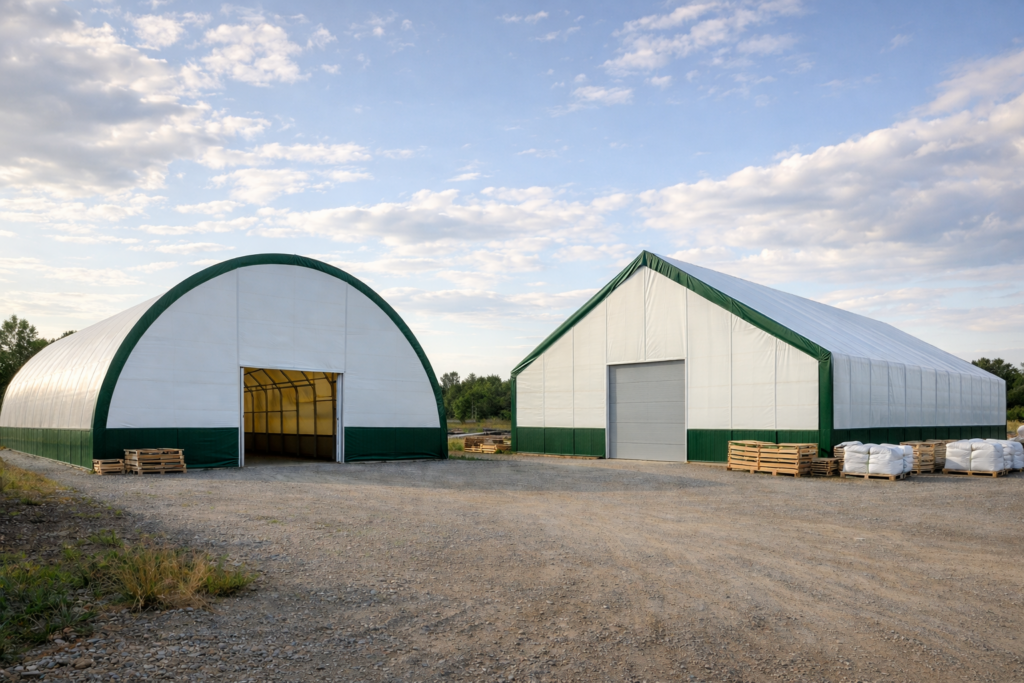
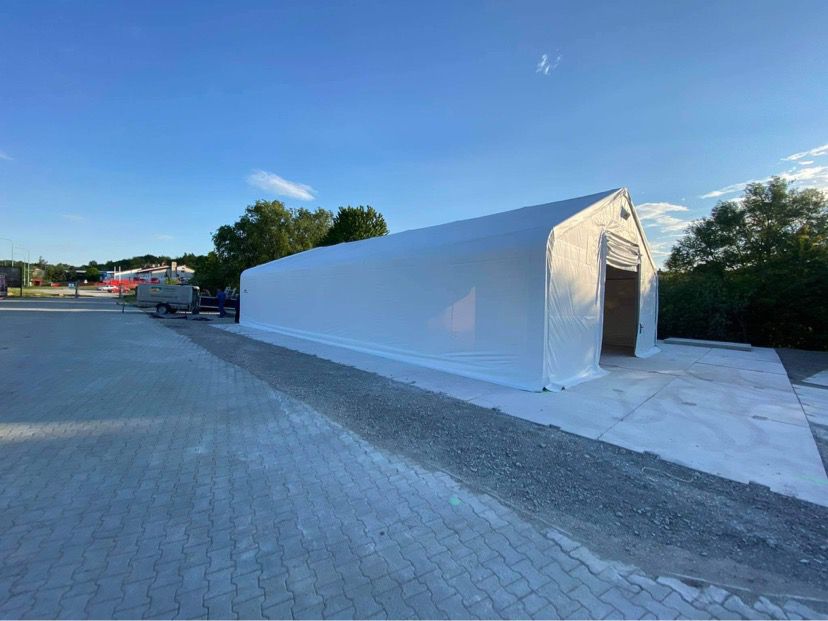
With larger volumes of harvest, for example from a farm or garden, a tarpaulin hall is increasingly used. Thanks to the possibility of natural ventilation and protection from precipitation, it provides stable conditions for storing vegetables. This is where you can effectively solve the problem of how to store garlic and onions in larger quantities without the need for expensive refrigeration.In practice, other crops are also stored, such as potatoes, which, if the right conditions are met, are successfully stored in the cellar. You can find more details in the article:When and how to plant potatoes: The right time, depth and distance.
Proper storage is not about complex procedures, but about following basic rules. If you know how to store garlic and onions, you can significantly extend their shelf life and reduce unnecessary waste. Dryness, cold, air and regular inspection are the four pillars of success. Whether you store a few kilograms in an apartment or a larger crop in a cellar or hall, these principles work reliably and long-term. You can also find other practical advice and solutions for storing your harvest at hagro.sk or in blog articles.