




How to winterize a car properly?
|
There are also drivers who don’t dare get in their car and drive during the winter, or simply won’t use it during the winter for some other reason. However, it is clear that long standing is not good for the car at all. A car is meant to be driven. So if you, for some reason, decide not to use it during the winter, it’s good to know how to winterize your car properly so that you don’t get an unpleasant surprise when you first start it. And this is despite the fact that you winterize it in a garage.
Why should you winterize your car?
- Wintering your car protects it from corrosion. Winter conditions, humidity and especially road salt are the biggest enemies of the body. If you leave your car unprotected for months, you may be in for an unpleasant surprise in the form of rust stains or paint damage in the spring.
- Preventing battery and engine problems Wintering your car will also help you with this.A car that has been sitting for a long time without starting may have a problem with the battery or engine system in the spring. Winterizing your car will therefore ensure that even if you do not use it or start it regularly, the technical components will not suffer due to this inactivity.
- Extending the life of your vehicle. If you take care of your car regularly, this will of course also affect its value and reliability. A car that you winterize correctly will look and function like new even after years.
What should you not forget when winterizing your car?
How to winterize your car? That is the right question. In this case, do not leave out any detail. Every single part mentioned in this section is important and essential to winterizing your car properly and getting it back in top shape in the spring. So let’s take a look at every single thing you should consider when winterizing your car.
1. Wash your car thoroughly
Before you start thinking about how to winterize your car, start by giving it a deep cleaning of both the exterior and interior.Wash the bodywork, removing all dirt and insectsas all of this can damage your paintwork. Don’t forget the underside of your car, where dirt and mud often accumulate. Finally, apply wax to the bodywork, which creates a protective layer.
2. Pay attention to the tires
Another important step in winterizing your car is the tires. Although cold weather does not damage them that much, prolonged standing still does. If you are one of those who do not use your car at all during the winter, you do not have to worry about changing the tires. In that case, it would be unnecessary. However, it should be remembered that flattened spotsmay develop on the tireswhen parked for a long time, so it is important to take proper care of them. To prevent this, it doesn’t hurt to overinflate your tires before storing your car for the winter. Some people also use special stands to prevent deformation.
3. Oil change
Before storing your car for the winter, it is advisable to change the engine oil. However, this does not apply to those people who leave their car idle for only a short time, for example, up to 4 weeks. And why is this done? Used oil may contain soot or unburned fuel residues, which could adversely affect the condition of the engine during the winter months.
When choosing a new oil, it is recommended to give preference to products containing ester synthetics. These components help maintain the ideal function of the lubrication system and prevent it from drying out even during a longer shutdown. This way, you will ensure that your car’s engine will be ready for trouble-free operation again after the winter.
4. Check the fluids before winterizing the car
They can pose the greatest risk to the fluids. If they contain water, they can freeze at low temperatures and cause damage to the car’s technical components. Therefore, it is important to start winterizing your car by thoroughly checking all operating fluids and topping them up to the maximum permitted level.
Focus especially on the antifreeze in the windshield washers. If you still have summer fluid in the tank, try spraying it out or mixing it with the antifreeze. Remember that the more antifreeze there is, the less chance there is of the fluids in the system freezing.
5. Watch out for the battery
In addition to winterizing your car, the battery itself is also important, because it is one of the most sensitive parts of the car to frost and long-term storage. You certainly know this if you haven’t driven your car in the winter for a few days and your car has been struggling a bit when starting, that’s exactly what it is. So what should you do with your car battery during the winter? In this case, you have two options: either leave it in the car or remove it.If you decide to leave the battery in place, it is essential to charge it to full capacity beforehand.An insufficiently charged battery could completely fail during the winter, and you would have to buy a new one in the spring. However, this option is only suitable for cars parked in a warm garage.
When parking outdoors or in an unheated garage, we definitely recommend removing the battery. Then charge it and store it in a dry place where the temperature is in the positive range.
Where and how is it best to winterize a car?
If you already know how to properly winterize a car that you will not be driving during the winter season, it is also important to know where it is best to winterize your car. What is best for a car?
One of the most basic options isa classic built-in garage. As long as it is dry, sufficiently ventilated and well insulated, you are in luck, and you can winterize your car there with the least amount of worry.
The problem, however, is that people don’t have such a garage. So what is best in this case? If you do not have a garage built on your property, you can purchase a tarpaulin hall, which is an ideal replacement for a classic building. It also has other advantages. It is inexpensive and much more convenient than a classic garage. Its assembly is also simple and can be erected on your property in one day. In such a tarpaulin hall, you can winterize your car just like in a garage, and then use this hall in other ways, such as as a workshop or as a storage space.
If you do not have either of these options and you will leave your car outside during the winter, we recommend that you buy a tarpaulin that is waterproof and cover the car with it during wintering. At least this way you will partially protect it from adverse weather and moisture.
If you have never put your car away for the so-called winter sleep and have no experience with winterization, you will certainly be wondering how to properly winterize your car. However, if you have read our article and follow these steps, you do not have to worry about anything. A protected and well-prepared vehicle will save you a lot of worries, money and time for repairs in the spring. So do not forget all the important steps, such as a thorough wash, checking fluids or proper storage, and your car will handle the winter without any problems.
Other articles
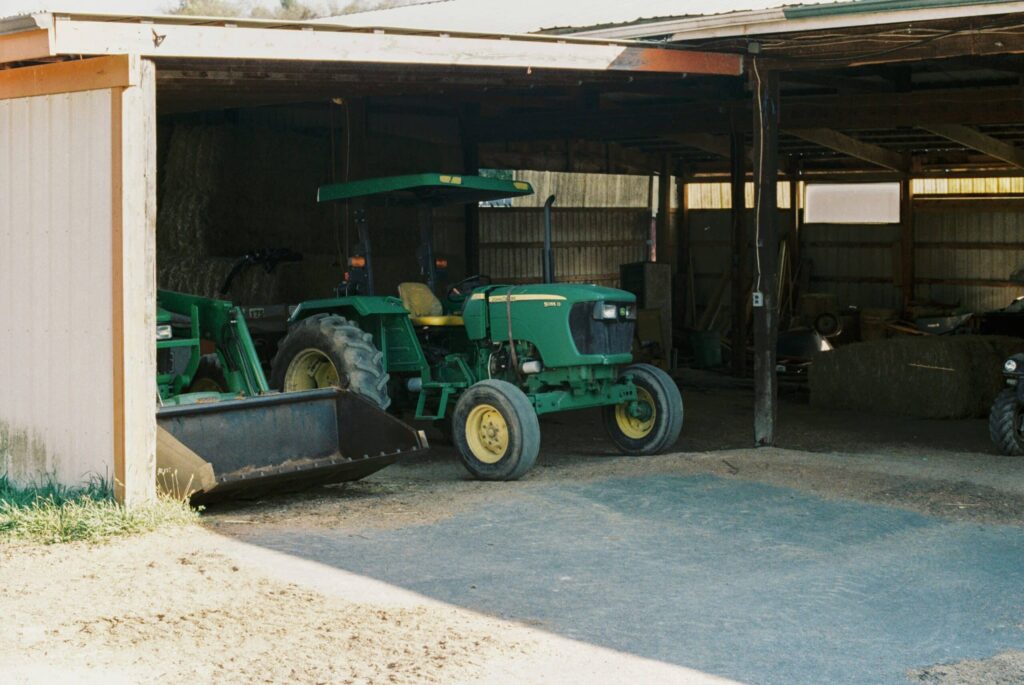
Tractor garage: How to choose the ideal solution for your equipment
Every owner of agricultural machinery knows…
Read more >>

Container living: Design living in a container house
Container housing represents a modern way…
Read more >>

Slope reinforcement: How to do it yourself and without major costs
An unstable slope can be very…
Read more >>