

Industrial halls: How to choose the right structure?
Industrial halls play a very important…
Read more >>
Potatoes are among the most popular crops in Slovak gardens and fields. Growing them is not too difficult, but if you want to achieve a rich harvest, you need to follow the correct planting time, appropriate depth, distance between tubers, and pay attention to soil and climatic conditions. In this article, we will look at when to plant potatoes, how to plant potatoes correctly, how deep, how far apart, and what all affects their growth and quality.
If you don’t have a classic cellar or warehouse, you can also store potatoes in covered spaces, such as tarpaulin halls – they protect the crop from rain and excessive sunlight and are also suitable for larger quantities of the crop.

How to plant potatoes and what to do before planting? At the very beginning, it is important to prepare the soil thoroughly. It should beloose, well-aerated and permeableso that the tubers develop well in it. It is ideal if the soil has a slightly acidic pH between 5.5 and 6.5. Avoid heavy clay soils that retain water – such an environment causes tuber rot and reduces yields. If the soil is very dense, it is advisable to loosen it or enrich it with sand and compost before the season. How to plant potatoes and the planting process Choosing quality seedlings: Use only certified seed potatoes that are healthy, virus-free and ensure uniform germination. Before planting, let the seedlings germinate at a temperature of 10-15 ° C for 2-3 weeks, ideally in a bright place.
This technique is suitable for smaller gardens as well as for larger areas where mechanization is also used. If you are also interested in home beekeeping and the possibilities of protecting them from the weather, we recommend that you read the article: How to keep bees: A complete guide for beginners.
When to plant potatoes and when is the right time? Planting depends on the altitude and local weather. In general, it is recommended to start planting when the soil warms up to at least 7 – 8 °C, ideally 10 °C at a depth of 10 cm. Night temperatures should not fall below 0 °C.
If you want to store potatoes outdoors or protect them from adverse weather, you can also consider tarpaulin halls, which will serve as a practical and affordable shelter for your harvest.
Indicative dates for planting potatoes by region in Slovakia:
When to plant potatoes and start planting? If spring is early and the soil warms up in March, you can speed up the planting by covering it with foil or non-woven fabric.
Correct spacing will ensure enough space for the development of the root system, good aeration and easier access for digging and harvesting.
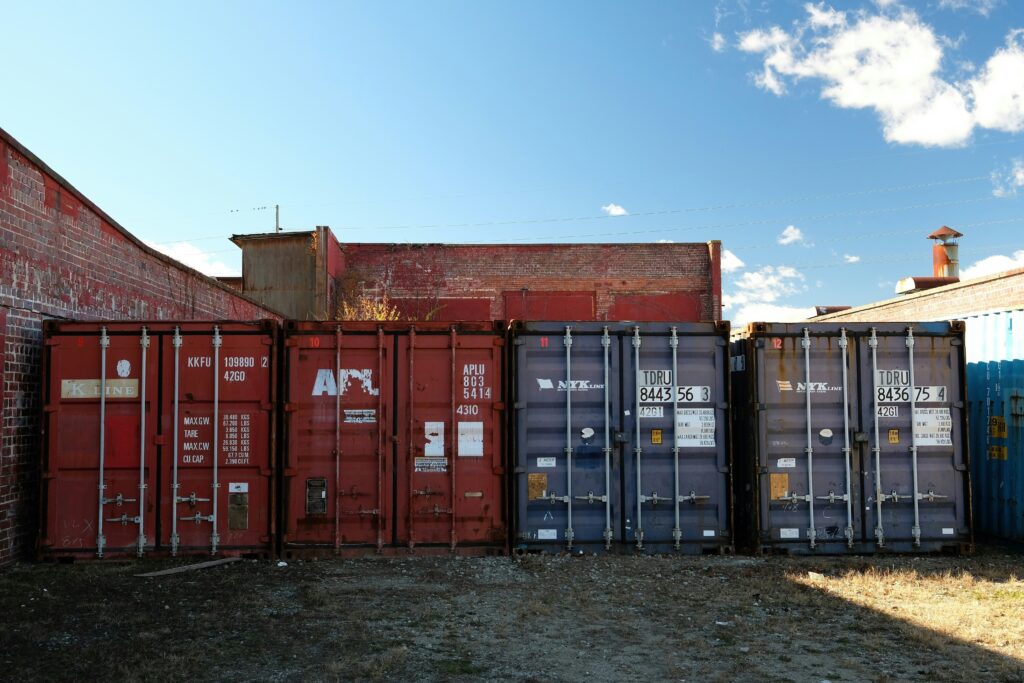
For short-term storage of potatoes, tools or garden accessories, you can also use a shipping container, which provides a solid structure, protection from the weather and easy handling on the plot.
Early potatoes are among the first crops to go into the ground in spring. Their advantage is not only early harvest, but also less susceptibility to some diseases. If you want to enjoy fresh new potatoes as soon as possible, the right planting timing is important.
Varieties such as Impala, Rosara or Adora are popular for their fast growing season and excellent taste. Their planting most often begins from mid-March to early April, but the exact date depends mainly on the current weather and soil temperature. It should be at least 7 to 8 °C to prevent the seedling from rotting.
To accelerate growth, it is recommended to use sprouted seedlings – pre-germinated tubers that already have small sprouts. This step significantly shortens the time it takes for potatoes to germinate in the soil.
Another practical trick is to cover the soil with transparent foil or agrotextile, which create more favorable microclimatic conditions. Thanks to this, growth can be accelerated by up to 10 to 14 days, which will be appreciated by anyone who can’t wait to see their first potatoes from the garden.
If you work on a slope or plan to plant potatoes in more difficult terrain, you may also find this practical guide useful: Slope Strengthening: How to Do It Yourself and Without Big Costs, which will help improve soil stability and protect the crop from landslides or erosion.
If you want tasty and high-quality early potatoes, care during their growth is key. Every step, from mulching to watering, has its own importance and affects the overall harvest.
Early potatoes are usually harvested in late May to early June. The exact date depends on the variety, climate conditions, and care during growth. By the time of harvest, the tops should be dry or at least noticeably yellowed – this is a signal that the potatoes are ready to be pulled out of the ground.
To protect them from adverse weather, you can use, for example, simple tarpaulin halls, which will protect the crop from rain, excessive sun or hail.
Are you also wondering: when to plant potatoes and how to achieve the highest yield? If you want to achieve a high yield, it is essential to follow proven agrotechnical principles:
Potatoes are not planted repeatedly in the same place before 3-4 years. Crop rotation is essential to prevent soil depletion and the spread of diseases such as potato cyst nematode. The best preceding crops are legumes (e.g. peas, beans), winter crops and maize, which leave the soil rich in nutrients.
Soil should be ploughed in autumn to a depth of at least 25-30 cm. In the case of heavy soils, deep ploughing is also recommended. In the spring before planting, loosen the soil and enrich it with compost, well-rotted manure or green manure (e.g. mustard, lupin), which improves the soil structure.
Use only certified, healthy seedlings without signs of mold or damage. Tubers of 30–60 g, with 2–3 sprouts, are ideal. Let the seedlings germinate in light and at a temperature of 12–15 °C for approximately 2–3 weeks before planting. Short, strong sprouts guarantee a quick start to growth.
Potatoes especially need potassium for tuber formation and stress resistance. Apply NPK fertilizer (e.g. 8-24-24 or 10-20-30) at a rate of 500 – 800 kg/ha according to soil analysis. In smaller gardens, you can also use hornbeam, wood ash (rich in potassium) or organic fertilizers intended for fruiting vegetables.
Regularly check for the presence of potato tapeworms and react at the first appearance. Apply preventive sprays against late blight (Phytophthora infestans), especially during wet weather. Prevention is also important – choosing resistant varieties and timely removal of infected plants.
Hoe after every rain or when the soil forms a crust, which improves aeration and promotes growth. Mulch the potatoes at least 2 times during the growing season – the first time when the plants are 15-20 cm tall, the second time before flowering. Watering is most important during the tuber formation period (approximately 4-6 weeks after planting), when plants need 20-30 liters of water per m² per week.
In this article, you learned how and when to plant potatoes. Growing potatoes is not a science, but it does have its rules. If you follow the correct planting date, appropriate depth and distance between tubers, you will be rewarded with a healthy and bountiful harvest. Watch the weather, adapt to the conditions of your region and invest in quality seedlings. This way you will ensure plenty of tasty home-grown potatoes without chemical sprays. More practical solutions for growers and gardeners can be found at hagro.sk.
Don’t forget that each location has its own specifics, so always check local conditions and adapt the planting date to them. That way, your efforts will definitely pay off in the form of a full bag of your own potatoes.