


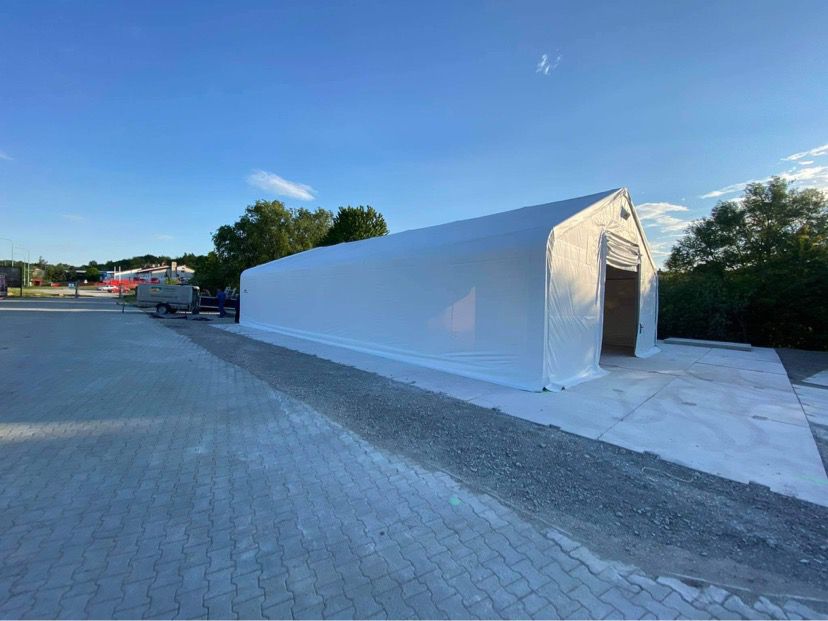
Production hall – How to build it cheaply and quickly | Hagro.sk
Production halls are an integral part…
Read more >>
If you own a boat or a dinghy, winter is a time when you need to pay attention to its proper storage. Many boat owners underestimate winterization, which often leads to damage to the engine, hull, or electronics.Properly storing your boat is essential for preserving its financial value and trouble-free launching into the water the following season.
In this blog article, we will look at how to do it step by step, where to best store your boat, and what to look out for when winterizing your boat. However, it is best to winterize your boat in a safe and practical sail hall, which will protect it from adverse weather.

Winter brings low temperatures, humidity and frost. These are the three main factors that can significantly damage a boat. If water remains in the engine compartment, pipes or tanks, it can freeze and cause cracks. In addition, moisture in the interior leads to the formation of mold, while an improperly covered boat can suffer from corrosion and deterioration of surfaces.
According to estimates by service centers, up to two thirds of all damage during the winter is caused by improper storage. Therefore, it is worth investing time and money in quality winterization. Proper storage of the boat, for example in a sail hall, means not only protection from the weather, but also from rodents, UV radiation or theft.
There are three main options: storing the boat at home, in a sail hall or in a professional boat service. Each of them has its advantages and disadvantages.
It is the cheapest solution, suitable for smaller boats or jet skis. However, the boat must be covered thoroughly, ideally with a waterproof but breathable tarpaulin that prevents condensation.
It is ideal for medium-sized and larger boats. The sail shed protects the boat from snow, UV radiation and wind. Thanks to ventilation, it prevents the formation of mold and corrosion. The smallest boats or very small ships that can be transported on a trailer can also be accommodated in a practical shipping container. You can choose a 6 m long shipping container or a 12 m long container. Whether a boat can fit in a sail hall or a shipping container depends on its width, length and height.
The most convenient, but also the most expensive solution. The price for the winter season ranges from €15 to €40 per m² (of boat space), depending on the size of the boat and the region of storage.
This procedure reduces the risk of damage by more than 80% compared to boats that have not been winterized:
Do you need to store agricultural equipment in addition to your boat? Read the article – Tractor garage: How to choose the ideal solution for your equipment.
A sail shed is the ideal solution for those who want to protect their boat from all weather conditions, but do not want to pay high fees for a professional marina. These halls are made of a solid steel structure and a special PVC tarpaulin with UV protection.
Due to their dimensions, they can store even larger motor boats.Storage in a tarpaulin hall reduces humidity by 30 to 40% compared to conventional exterior covering. In addition, it allows easy access during the winter – for checking the battery, topping up the oil or minor maintenance.
If you are looking for a practical solution, check out the offer of sail halls or ship containers, which are designed specifically for the safe storage of boats and other machinery.
Among the most common mistakes when winterizing a boat include:
If you avoid these mistakes and choose the right boat storage, you will save hundreds of euros in spring repairs and extend the life of your vessel by years.
Proper storage of the boat is an investment in its lifespan and reliability. If you thoroughly clean, prepare, dry and cover your boat, you can be sure that you will have a trouble-free start to the new season in the spring. Also consider the option of storing it in a sail hall, which provides optimal protection at a reasonable price.
To find out more about the options for storing and protecting boats or other machinery, see the range of solutions for farmers, entrepreneurs and equipment owners at hagro.sk.