

Comparison of energy efficiency of sheet metal and canvas halls
Choosing a hall is not an…
Read more >>
Insulated prefabricated halls are used quite often nowadays. Thanks to their robust construction and ability to provide reliable protection in various climatic conditions, insulated prefabricated halls have gained their popularity. However, tarpaulin halls have also come onto the market and have begun to gain their fans with their flexibility and very quick assembly. When choosing a hall, it is important to consider various factors such as cost, durability, maintenance and specific requirements for the use of space. Choosing the right hall depends on your individual needs and the conditions in which the hall will be used. This article will help you explore the basic differences between insulated prefabricated halls and canvas halls.
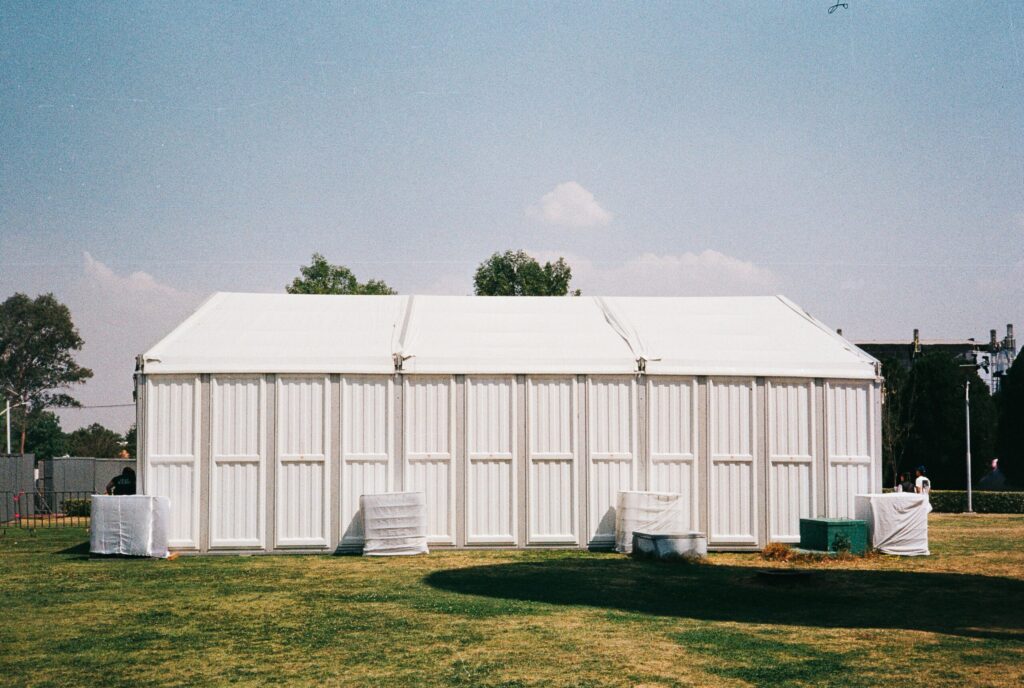
Insulated prefabricated halls are usually made of steel or aluminum structures and covered with insulated panels. These halls are known for their robust construction and ability to withstand various weather conditions. An outstanding feature of insulated prefabricated halls is their high thermal insulation, which allows them to maintain a stable internal temperature. They are the ideal solution for permanent installations such as production halls, warehouses or sports facilities where long-term durability and weather protection are required.
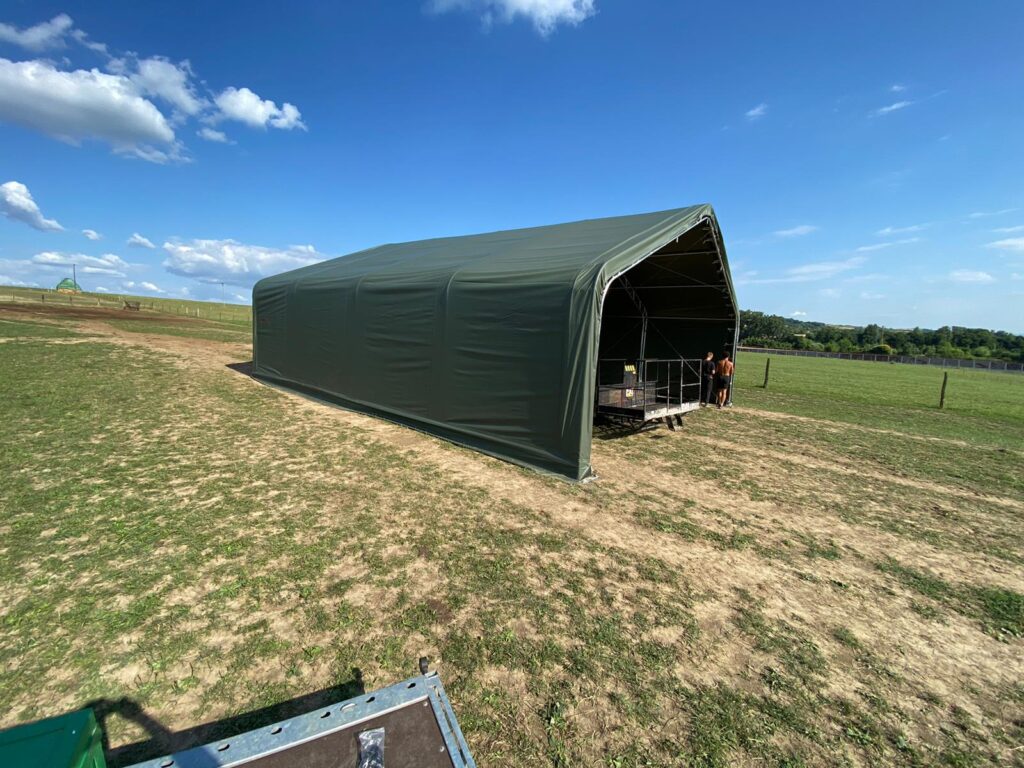
On the other hand, tarpaulin halls are constructed of metal frames and covered with a durable PVC tarpaulin. Tarpaulin halls offer lower material and installation costs compared to insulated prefabricated halls. They are suitable for various applications such as sports and cultural events or covering construction sites. However, tarpaulin halls can also be used for a long time.
With tarpaulin halls, the process of obtaining a building permit is much simpler. In many cases, tarpaulin halls only require a construction notification and not a full building permit, which speeds up the approval process.
Tarpaulin halls are an attractive choice for various projects. The materials used for their construction are affordable, and the assembly itself is quick and easy. Therefore, the price of a tarpaulin hall is very low.
Another significant advantage is their flexibility and adaptability. Tarpaulin halls are modular and can be easily adapted to different sizes and shapes according to specific needs. This ability allows for easy expansion or modification of the structure according to changing requirements.
The maintenance of tarpaulin halls is relatively simple and undemanding. The tarpaulins are made of durable materials that are designed to withstand weather conditions such as rain, snow and UV radiation.
A tarpaulin hall also allows for long-term storage. If you need to quickly secure space for storing goods or materials, a tarpaulin hall is an ideal choice. Its quick assembly allows for immediate space setup without long-term construction work.
Tarpaulin halls are also suitable for temporary or seasonal storage of agricultural crops, machinery or other materials that require protection from weather conditions.
For construction companies, a tarpaulin hall can be useful as a workplace for employees or for storing materials.
Prefabricated halls are often used in logistics centers. Their thermoregulation allows for the creation of optimal storage conditions with sufficient space for logistics operations.
These halls serve as production facilities for various industries. The robust construction of insulated prefabricated halls is suitable for multiple production processes.