

Mobile Container House: Flexibility and Freedom of Modern Living
Mobile container houses have become an…
Read more >>
Prefabricated halls are a popular product today, which is also an integral part of construction and industry. Prefabricated halls have many positive aspects, including their extremely fast construction, flexibility, and of course much lower costs, making them an ideal choice for a very wide range of applications. For example, they are often used as warehouses, production facilities, sports halls, stables, and the like. A popular option is also tarpaulin halls, which are covered with a durable PVC tarpaulin and can be built on any reinforced surface. These tarpaulin prefabricated halls can even be dismantled and assembled in another location if necessary. But what is behind such a high-quality prefabricated hall?
However, behind this product’s success lies a solid foundation, which is the structure of the prefabricated halls. The structure of a prefabricated hall is a key element that determines its stability, durability and resistance to external influences. In this text, we will take a detailed look at the types of prefabricated hall structures and introduce them to you individually.
Prefabricated hall structures are divided into two basic types: light and heavy steel structures.
The world of construction is constantly evolving and looking for innovative solutions that would combine durability, speed of construction and a favorable price. Light steel structures of prefabricated halls meet exactly these requirements. They are based on truss frames made of hollow profiles connected by steel tubes at a modular distance. Thanks to their well-thought-out design, they are characterized by low weight, which brings several benefits.
Where maximum strength and durability are needed, heavy steel structures of prefabricated halls come into play, for example in the construction of industrial parks or sports halls. These skeletons are made of massive rolled profiles that are interconnected into solid frames. Thanks to their robustness, they can handle even the most demanding operating conditions and withstand large spans without any problems.
Prefabricated tarpaulin halls are also divided based on the shape of their structure, most often you can find arched, tent or frame.
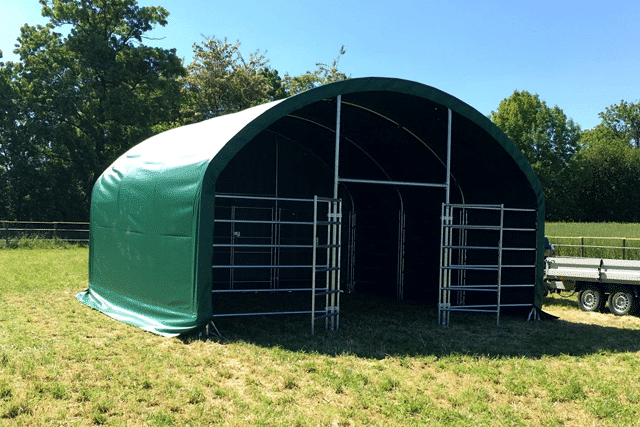
This type of prefabricated hall structure is characterized by its rounded shape, which provides excellent aerodynamics and resistance to wind and snow. Arched structures are often used for agricultural halls, warehouses or sports facilities. Due to their design, they do not require internal columns, which allows maximum use of the internal space.
Tent halls have a structure that resembles a traditional tent or a family house. They are based on supporting frames or columns that create a structure on which a shell made of strong fabric or other material is stretched. This fabric can be made of PVC, polyester or other durable materials that provide protection from weather conditions.
This type of structure consists of supporting frames that are connected by horizontal and vertical elements. Frame structures are very strong and stable, which makes them ideal for large industrial halls and warehouses. Assembly is relatively fast and efficient, which reduces construction time and costs.
Of course! Like everything else, prefabricated hall structures need to be taken care of to extend their lifespan and ensure they remain fully functional for many years. But how should you take care of prefabricated hall structures?
At least once in a while, you should visually inspect the structure for any damage, corrosion, etc. The sooner you find any defects and damage, the better.
Steel structures can be susceptible to corrosion, especially if they are exposed to moisture or certain chemicals. In this case, it is advisable to use anti-corrosion coatings and regularly check the condition.
Investing in maintenance is definitely worth it, because only by regularly caring for your prefabricated hall will you extend its lifespan, ensure its trouble-free operation and save money on repairs. Prevention is always a cheaper option than dealing with repairs due to neglected maintenance.