

Container transportation: How shipping containers are moved
Transporting shipping containers is a technically…
Read more >>
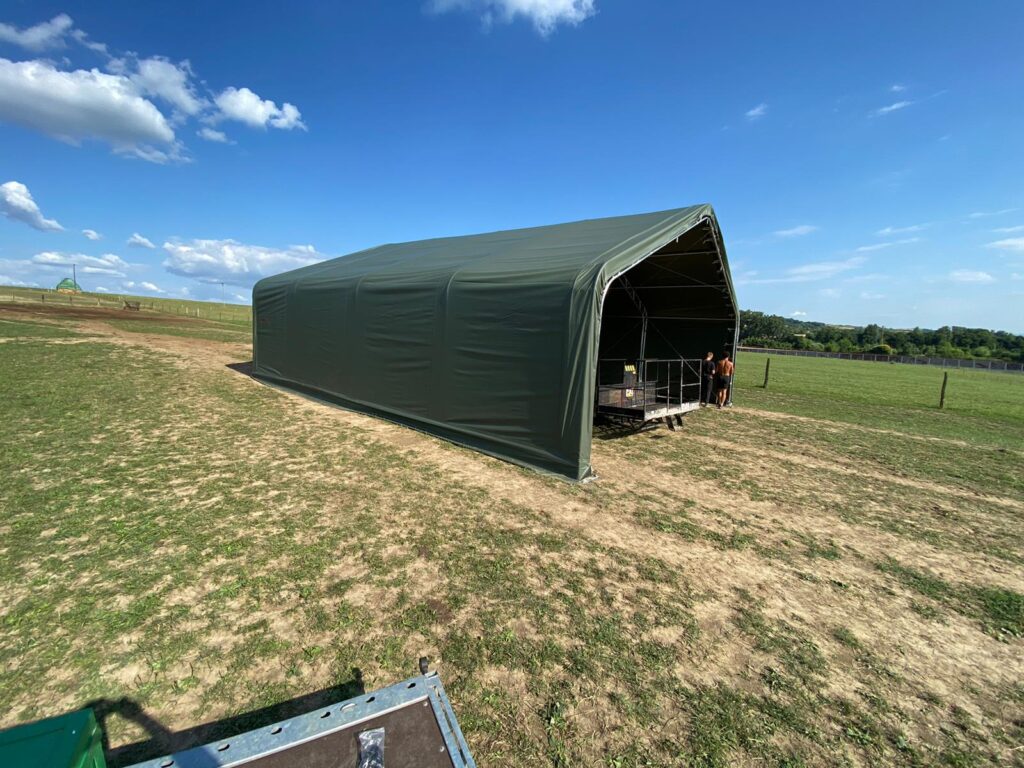
Sometimes, in a tarpaulin hallsmall droplets of water appear and start falling from the ceiling, and you have the feeling that something is wrong. Water droplets on the tarpaulin, steel structuremachines and goods may rightfully worry you, but the solution is often very simple.
However, in reality, there is no major defect or damage to the hall tarpaulin. This is a relatively common phenomenon called condensation. This physical phenomenon can bother almost every owner of a tarpaulin hall. Let’s take a look together at why condensation occurs, what the most common problems are, and how to effectively solve it.
Condensation is a natural physical phenomenon that occurs when moist and warm air mix and come into contact with a cold surface. In this case, the cold surface is a metal structure or the inner surface of the tarpaulin hall. Moist air condenses and turns into water droplets when it cools down sharply.
Intarpaulin halls, you may encounter this problem in the early morning hours, when the temperature begins to rise rapidly after the night’s cooling. You may also observe it when the outside temperature fluctuates, especially if the hall is poorly ventilated or completely closed. Condensation tends to be strongest in spring and autumn, when there is high air humidity and large temperature differences. The occurrence of condensation can also be partly influenced by the frequent movement of people, agricultural machinery and the storage of wet goods (e.g. grain, hay and fertilizer).
In the long term, condensation can cause serious damage, especially if it occurs regularly or if you cannot prevent it effectively. The most common problems include:
Prevention is cheaper than dealing with damage in every respect. In the case of tarpaulin halls, the best protection seems to be preventing condensation. Let’s look at some proven tips on how to prevent it:
If you have been struggling with condensation for some time, don’t despair! There are very effective methods to limit or completely eliminate it. The basis is the correct construction and professionally executed installation of thetarpaulin hall. We also recommend that you prevent water from the surroundings from penetrating into the hall.
If you have met both points, it is time to start ventilation. Additional ventilation, air conditioning, open gates, blinds and turbineswill help minimize condensation or eliminate it completely. The best thing to do is to combine all the options and in case of high humidity we recommend opening the main gate to exchange the humid air with dry air.
Other effective solutions include anti-condensation sheet (absorbs moisture and prevents dripping), hall insulation (simple insulation of the walls with thermal insulation material), dehumidifiers (suitable for smaller halls) andtemperature control (infrared heaters and heaters). If all the above methods do not work, do not hesitate to contact us – our professionals will be happy to advise you professionally.
Water condensation in tarpaulin halls is a common phenomenon that can be effectively and efficiently resolved. It does not matter whether you use the hall for production, storage of machines or for agricultural purposes, it is important to recognize the causes of excessive condensation in time and eliminate the problem in time. However, if you underestimate it, you can expect more serious problems.