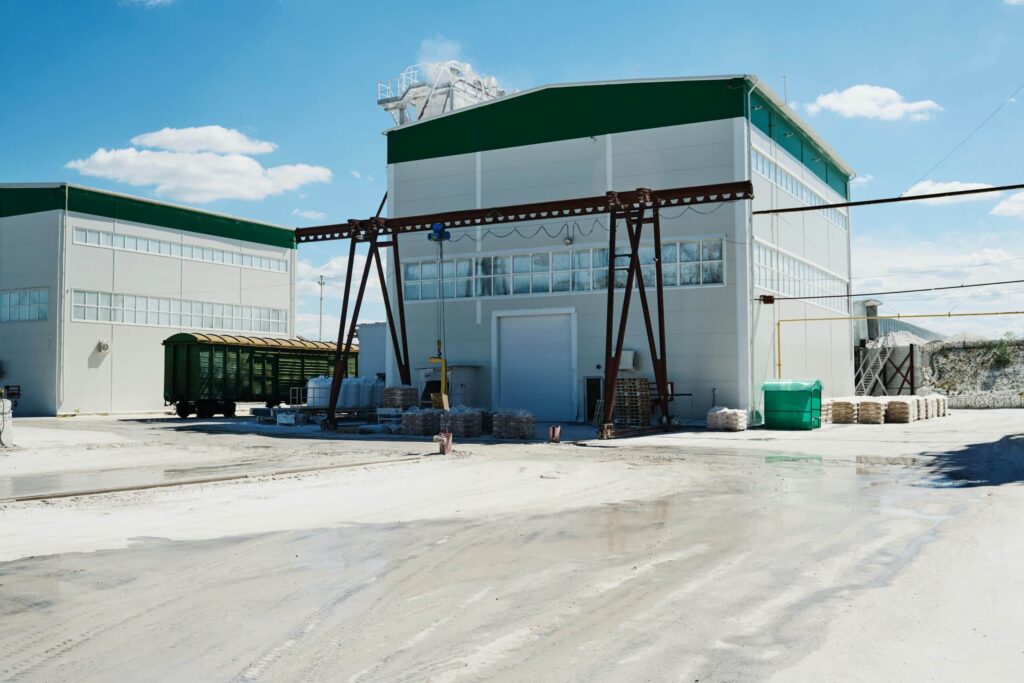


How to take care of the hall so that its lifespan is as long as possible?
A tarpaulin hallis a fast and…
Read more >>
Pig breeding is one of the traditional sectors of animal production in Slovakia.For many smaller farmers, it is a way to ensure quality meat for their own consumption, while large farms ensure stable production for the market. However, in order for pig breeding in Slovakia to be carried out in accordance with the law and hygiene standards, it is necessary to knowthe conditions for pig breeding, housing rules, as well as the principles of proper nutrition and fattening of pigs. For suitable housing, durable and spacious solutions are often used, such as tarpaulin halls.

The breeder is obliged to register each pig breeding in the Central Register of Livestock (CEHZ), which is administered by the Breeding Inspection of the Slovak Republic. Registration is necessary even when breeding one pig. The conditions for pig breeding are based on Act No. 39/2007 Coll. on veterinary care and European legislation. You can also find more practical tips on how to raise pigs in the article: Raising pigs at home: How to start and everything you need to know.
The basic responsibilities of raising pigs in Slovakia include:
Failure to comply with these legal obligations can lead to fines of up to €3,500.
The conditions for pig farming in Slovakia are set by law. The space for pig farming must meet basic hygiene and technical standards.A minimum area of 0.65 m² is recommended for one fattened individual, and up to 3.5 m² for sows. It is important to:
Water for drinking must meet drinking water parameters according to EU standards. At the same time, it is necessary to prevent contact between domestic pigs and wild boars, thereby preventing the spread of African swine fever. As a practical housing solution, it is also possible to use tarpaulin halls, which meet the requirements for hygiene and animal protection.
Proper nutrition for pigs is the basis for healthy growth and high-quality meat. The feed ration consists mainly of cereals (wheat, barley, corn), protein supplements (soybean, peas) and mineral-vitamin mixtures. Pigs up to 25 kg consume approximately 1.2 to 1.5 kg of feed per day. Fattened piglets from 25 to 60 kg consume 2.5 kg of feed. Pigs over 60 kg consume 3 kg of food. It all depends on the intensity of fattening of pigs.
The protein content in the feed should be at the level of 18 to 20% for young pigs, while it gradually decreases to 15% during fattening of pigs. It is important to avoid sudden changes in feeding, which can cause digestive problems.
Fattening pigs takes place in three phases: growth (up to 30 kg), middle (30 to 60 kg) and final (60 to 110 kg).
The whole process usually takes 5 to 6 months. The goal is to achieve optimal weight with the lowest possible feed consumption.
The average feed to meat conversion is 2.8 to 3.2 kg of feed per 1 kg of gain.High-quality fattening of pigs requires, above all, a balanced feed ration, a stable feeding regime (2 to 3 times a day) and monitoring of health and growth.
Before starting pig farming in Slovakia, it is necessary to meet the basic conditions for pig farming, which include:
Fulfilling the basic conditions for pig farming in Slovakia is essential for legal and safe pig farming in Slovakia.
Pig farming in Slovakia is a binding process that requires discipline, compliance with legislation and a responsible approach to animals. If the conditions for pig farming are met, the farmer can achieve high-quality meat production with high added value. Proper registration, hygiene standards, nutrition and controlled fattening of pigs are the basis for the success of every breeder. You can find more useful information about livestock farming at hagro.sk.