

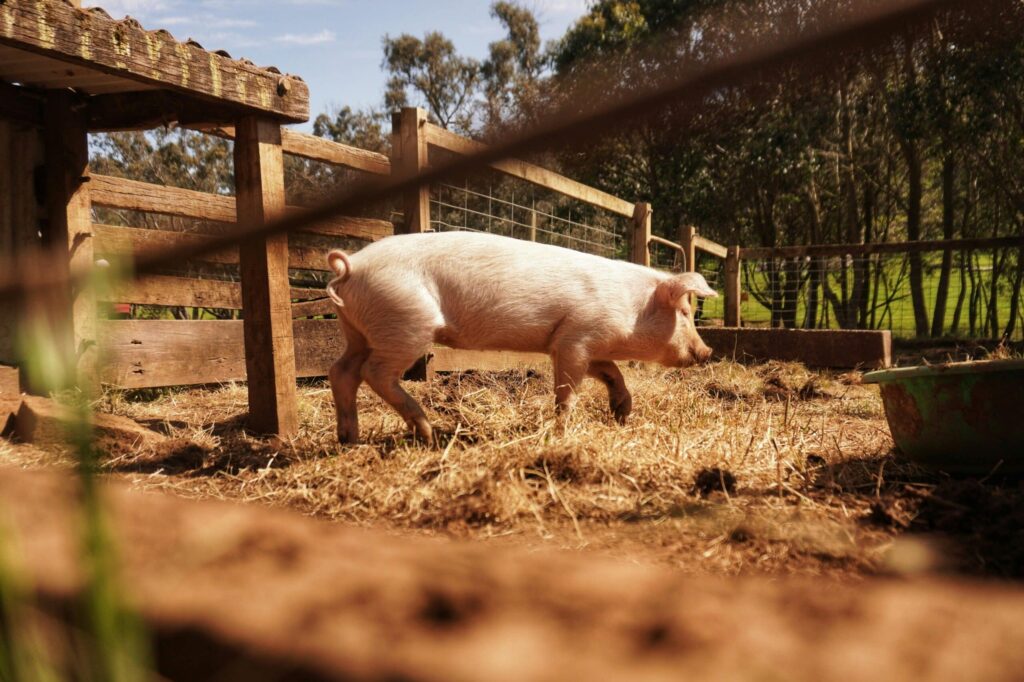
Raising Pigs at Home: How to Get Started and Everything You Need to Know
Raising pigs at home is once…
Read more >>
Military warehouses play an important role in the logistics of the armed forces. They are used to store weapons, ammunition, fuel, equipment or humanitarian material.While in the past, mainly reinforced concrete or brick military warehouses were built, today modern alternatives in the form of tarpaulin hallsare increasingly being promoted. They offer efficient and fast construction, low costs and flexibility, which is extremely important in a military environment. According to NATO data, up to 30% of temporary military storage in missions around the world is realized through lightweight prefabricated structures including tarpaulin halls and shipping containers.

The army needs solutions that are universal, mobile and can quickly adapt to changes and deployment conditions. Tarpaulin halls also meet the demanding requirements for military warehouses in several aspects:
Military warehouses can be divided according to the purpose and nature of the stored material:
These types of military warehousesrequire the highest level of security, strict fire prevention measures, special ventilation systems, and controlled humidity or temperature conditions. Ammunition must be stored separately by caliber and type, while the tarpaulin halls can be supplemented with practical ship containers and safety barriers.
Military warehouses must be constructed to prevent the risk of leakage or explosion. They are equipped with an impermeable floor and a liquid collection system. In some cases, they are also supplemented with special sensors for gas monitoring.
They are used in crisis situations and various foreign missions. Tarpaulin halls allow the installation of refrigeration units, rack systems and mobile logistics lines, making it possible to provide food aid even in remote areas.
Military warehouses provide covered space for heavy machinery, tracked vehicles, armored vehicles or even helicopters and smaller aircraft. They are also used to store various medical equipment or as a base for field hospitals. The equipment protected in this way has a significantly longer lifespan and greater operational readiness.
Military warehouses built from tarpaulin halls bring several fundamental advantages. One of them is the speed of construction, which is up to 10 times faster than with standard brick buildings. In addition to speed, construction costs are low. Tarpaulin halls eliminate foundations and part of the construction work, which significantly reduces the budget. While you can build one building with the same time and budget,in the case of tarpaulin halls, it is possible to build up to 5 buildings at once (depending on budget and capacity).
Modern canopy halls let in daylight, reducing lighting costs by up to 70%.Another advantage is its high modularity, and the hall can be easilyexpanded with additional modules according to the current needs of the army. Interestingly, tarpaulin halls are resistant to adverse weather, withstand winds over 100 km/h and can withstand snow loads of up to 120 kg/m².
Military warehouses must meet strict safety and technical standards. Tarpaulin halls used in military environments are certified according to European and international standards:
Modern military warehouses are increasingly oriented towards efficiency, flexibility and quick availability. Tarpaulin halls meet these requirements and at the same time offer advantages that classic brick buildings cannot provide. Therefore, it is not surprising that they are becoming the standard in the construction of temporary and long-term military warehouses. The army thus gains infrastructure that is ready to respond to the dynamic needs of the modern military environment. You can find more about the possibilities of tarpaulin halls at hagro.sk.